
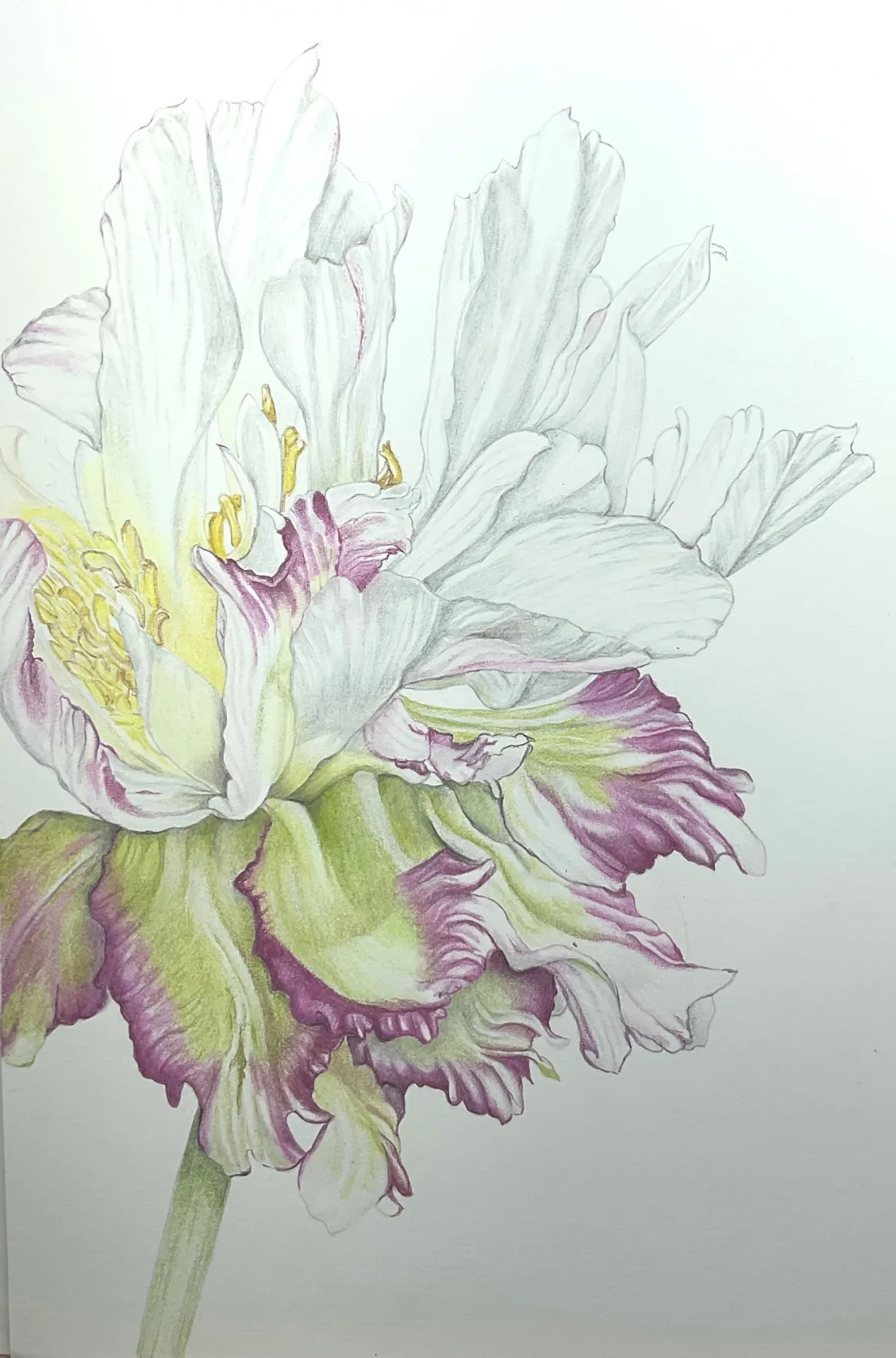
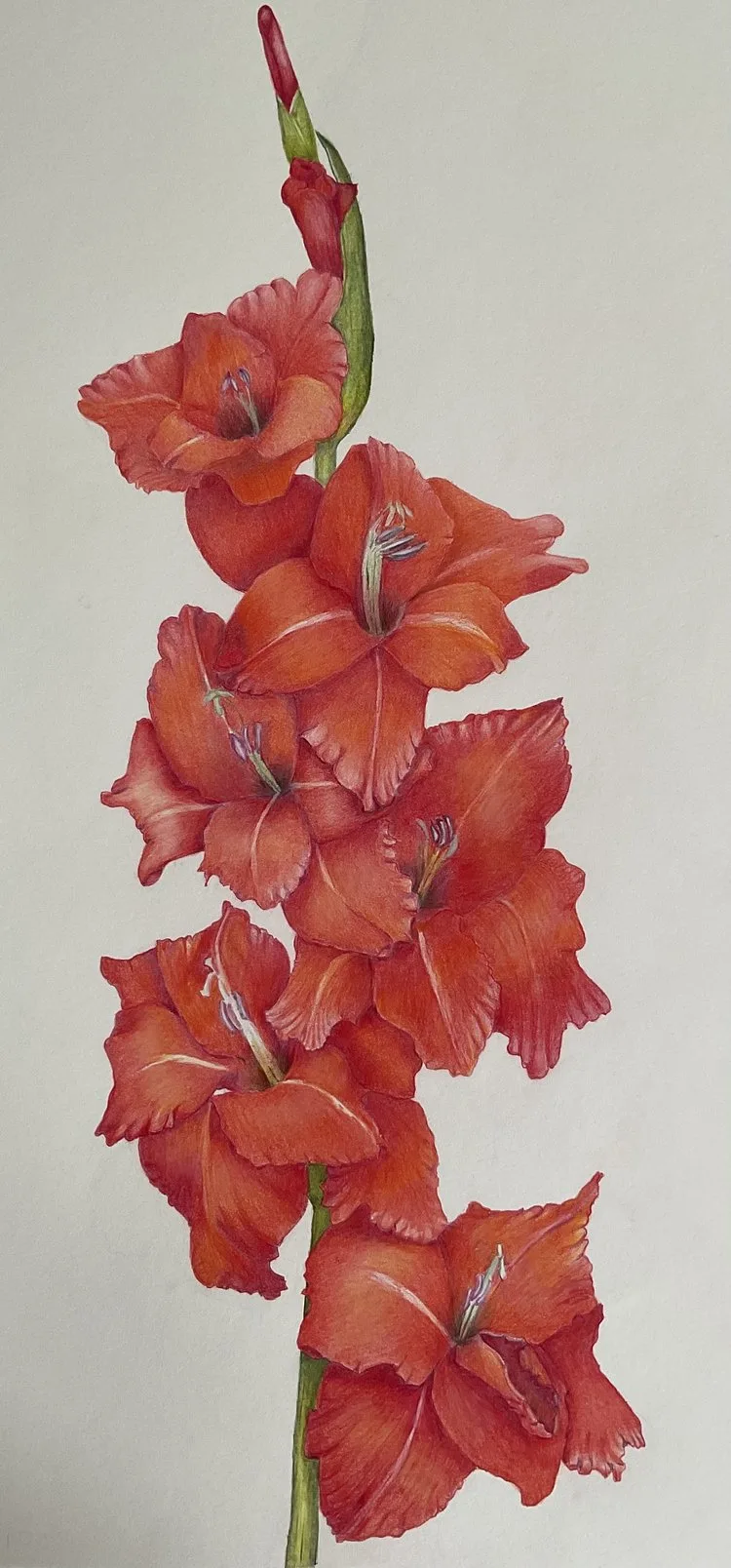
Colored Pencil Botanical Holiday Drawing Workshop – with Teri Goetz (Sunday, November 16th and Monday, November 17th 10am to 3pm)
Price range: $240.00 through $305.00
Sunday November 16th and Monday November 17th | 10am to 3pm
Location: Washington Art Association General Studio
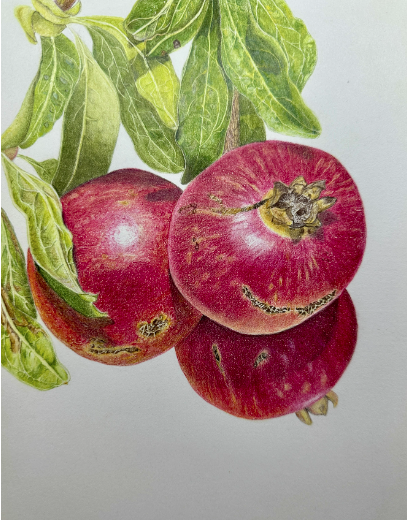
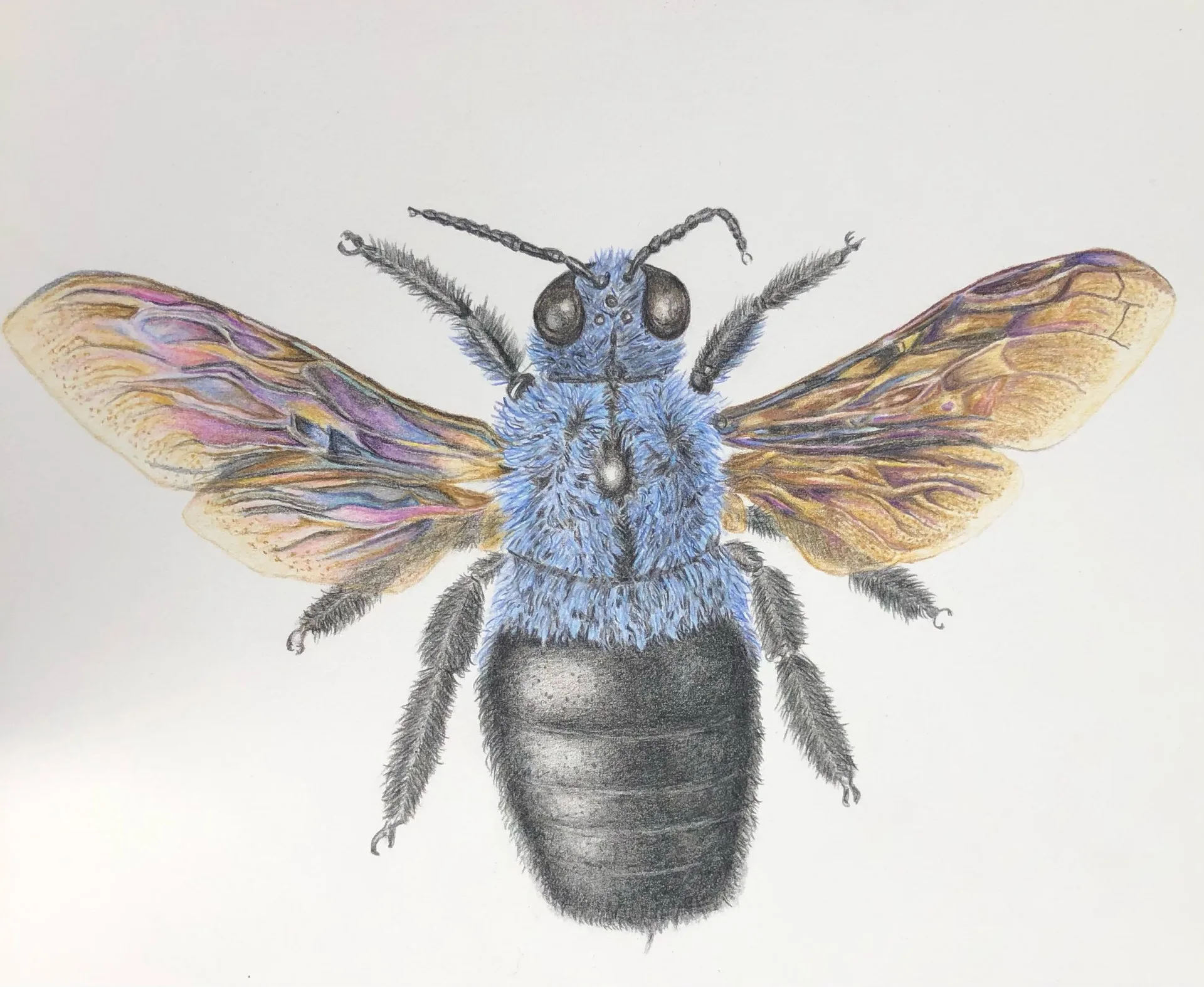
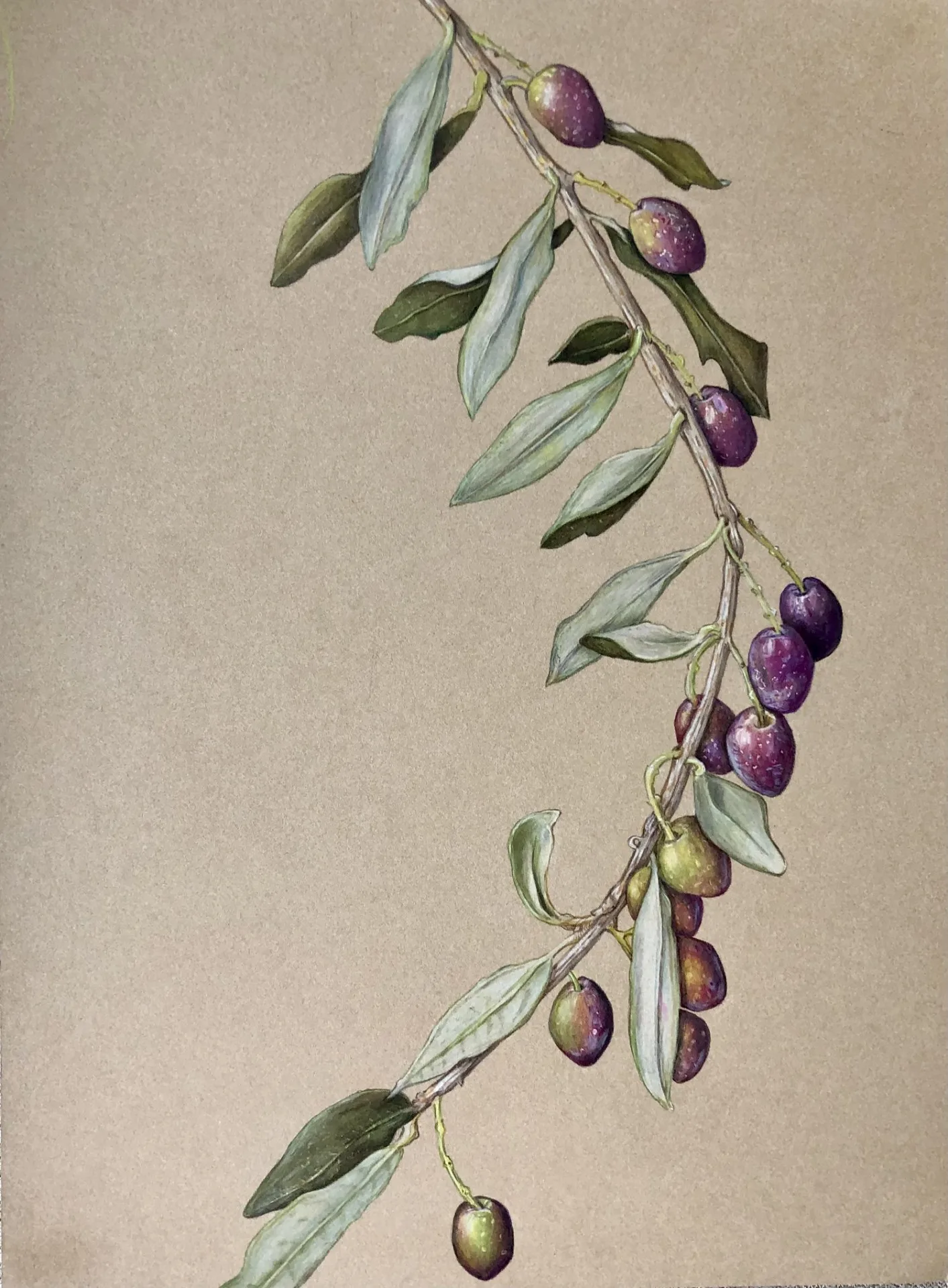
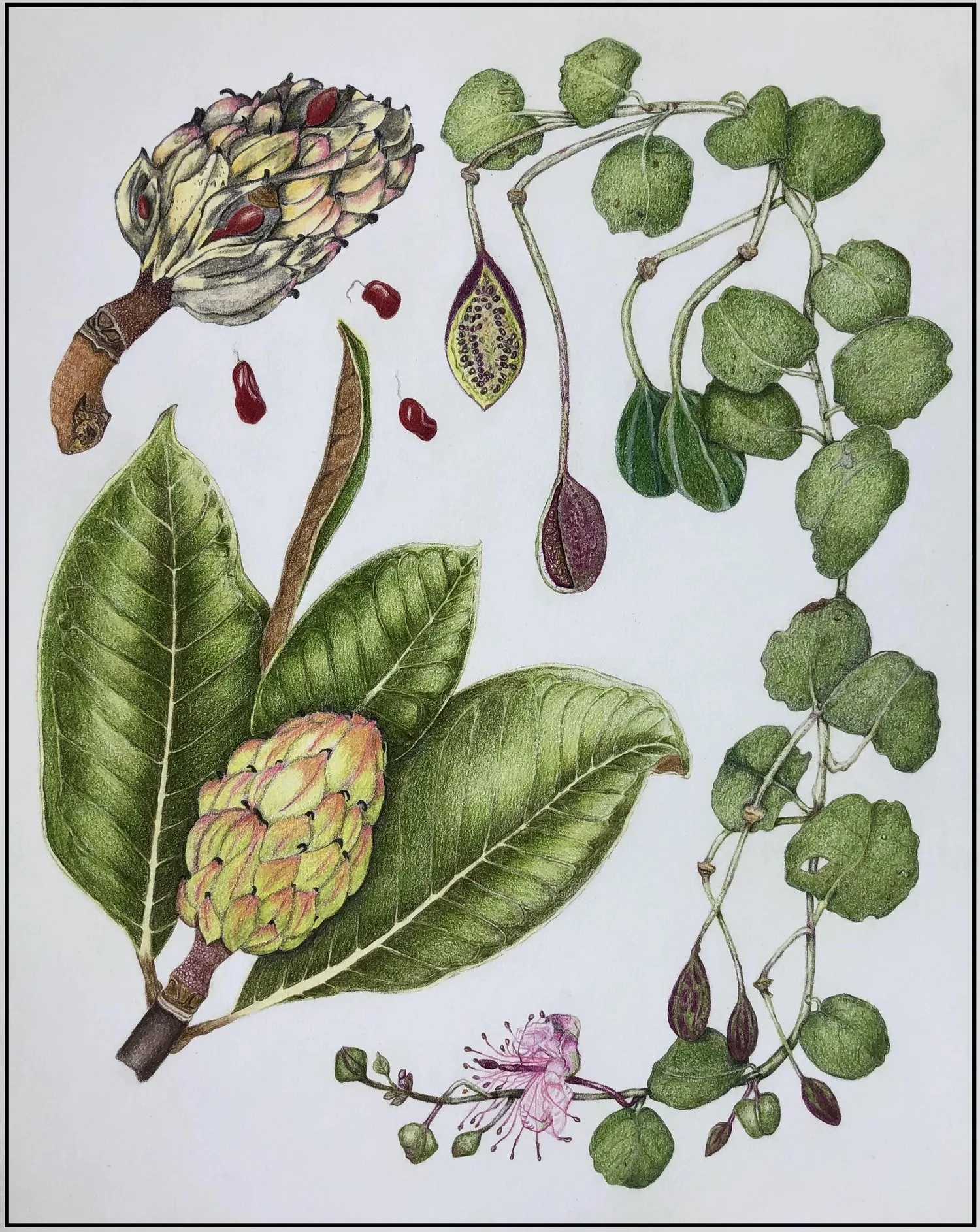
This workshop is a wonderful opportunity to create a colored pencil botanical holiday drawing. Come have some fun with colored pencils. They are a perfect medium to draw botanical subjects, especially for the beginner, although all levels are welcome. By using methodical techniques like tonal variation, light and shadow and building layers, easy to draw shapes will become realistic botanicals. In a non-threatening environment, you’ll be taught and then guided through exercises to understand materials and methods and light on form to create realistic 3D images, then the use of blending and color layering on the 3D form. Line drawings will be provided or, you can draw the (provided) subjects on your own. Come join us as we explore the meditative process of using colored pencils to create a botanical holiday drawing, which you can turn into a card.
Subjects will be supplied. Depending on what’s available and attractive at the time, Teri will guide you through drawing and coloring your subject.
Supply List for Colored Pencil, Beginner Class with Teri Goetz
Note: links are for examples. You can find similar items at art stores, etc.
— Colored Pencils:
Faber Castell Polychromos Colored Pencils (oil based): These are my first recommendation. Unfortunately, the sets they sell contain colors that are not used often in botanical art. You can buy individual pencils at dickblick.com.
Following is a good starter collection, although we likely won’t be using any greens in the pomegranate class. If you’d like to swap them out for the pomegranate we will be doing, I’d suggest you get a few extra reds like: deep red #223, venetian red #190, caput mortuum #169, pale geranium lake #121, light cadmium red #117. These reds get used a lot in botanical art. If you have any questions, please contact me.
Starter collection:
- Cadmium yellow #107
- Pale geranium lake #121
- Middle purple pink #125
- Permanent green olive #167
- Earth green yellowish #168
- Purple violet #136
- Dark cadmium orange #115
- Dark sepia #175
- Red violet #194
- White #101
- Ivory #103
- Burnt sienna #283
- Yellow ochre #183
- Earth Green#172
additional very helpful colors:
- Cadmium yellow lemon #205
- Dark Indigo #157
- Warm grey IV #273
- Madder #142
- Ultramarine #120
- Dark indigo #157
- Chrome Oxide green #278
- Olive green yellowish #173
- Dark flesh #130
- Burnt ochre #187
Lyra or other “colorless blender” like this.
— Prismacolor pencils
More wax based, are less expensive but softer. Good for pastel colors, which Faber Castell lacks a bit (like lilac). They work well for many things, (and some very famous colored pencil artists solely use these) but are harder to get (and keep) a sharp tip (key to botanical drawing with colored pencil). As they are creamier they can build up and can make it harder to layer. If you already have these, we can make it work!
Other acceptable brands: Caran D'ache Luminance (also softer) or Caran D’ache Pablo
-- Please note that it is key that you use these brands (I prefer Faber Castell) not something you might have at home (like Crayola, student grades, etc.) because they won't layer well and are not lightfast.
— Paper: 9x12 or larger
This is personal choice, but here are recommendations:
Smooth paper: It is easier and quicker to cover the surface of smooth paper without a lot of texture. Also slightly harder to erase than slightly textured. Strathmore is a decent brand. Strathmore Bristol 400 smooth surface. 300 would work as well.
Slightly textured paper: It takes more layers to cover the paper with slight texture, but you can add more layers, giving you a little more flexibility and luminance. This paper is a little more durable for those many layers (my preference for this class).
- Strathmore 400 or 500 Series Bristol-vellum surface
- Legion Stonehenge White Vellum finish
- Hot pressed watercolor paper (140 lb): Fabriano Artistico, Fabriano Classico, Stonehenge Aqua, Arches. Cold pressed paper doesn’t work well for colored pencil as it is too rough and the pencil doesn’t glide on well.
— Pencil Sharpener:
A handheld sharpener: Rapesco 64 or Muji Desktop, or you can also use a small sharpener like this but it can get tedious to use. Plug in electric sharpeners (like Panasonic KP-4A) are fine, too, but the handheld gets a finer point. You can use these with sandpaper to get a finer point, as well.
— Sandpaper Block or 1 sheet of 600/800 grit sandpaper (get the latter at hardware store) for making a finer point. Especially important if using electric or older, dulled sharpener.
— Erasers: Tombow mono zero eraser, a kneaded eraser and a plastic vinyl eraser can come in handy.
— Embossing tool: I will have some to use, but if you want to get one, it’s excellent to have! Err on the smaller side like this.
— Tracing paper: I like Canson tracing calque, initial drawings often done on tracing, then transferred to good paper. If you have a portable Lightbox, bring that to transfer drawing. I will bring mine to share around, as well. We also use this under your hand so you don’t smudge the color
— Ruler: If you can find a clear one, that is best. Used to measure object if using live subject. You can also use dividers if you have them. I will bring some for you to use, as well. You can also use very straight sticks (like chopsticks)!
— Drafting or art tape: to tape drawing to board. (I will bring some if you don’t want to buy).
— Soft brush: (a VERY clean makeup brush or art brush) You can also use a clean feather - to brush away “crumbs” of color.
— Magnifying glass: again, I will have but will be helpful if you have your own to look at details. Not mandatory.
— Graphite pencils: I’d suggest bringing an F and/or HB pencil. F is midrange and good for sketches. A darker (HB or darker) pencil is good to outline the sketch to make transfer easier.
Description
Supply List for Colored Pencil, Beginner Class with Teri Goetz
Note: links are for examples. You can find similar items at art stores, etc.
— Colored Pencils:
Faber Castell Polychromos Colored Pencils (oil based): These are my first recommendation. Unfortunately, the sets they sell contain colors that are not used often in botanical art. You can buy individual pencils at dickblick.com.
Following is a good starter collection, although we likely won’t be using any greens in the pomegranate class. If you’d like to swap them out for the pomegranate we will be doing, I’d suggest you get a few extra reds like: deep red #223, venetian red #190, caput mortuum #169, pale geranium lake #121, light cadmium red #117. These reds get used a lot in botanical art. If you have any questions, please contact me.
Starter collection:
- Cadmium yellow #107
- Pale geranium lake #121
- Middle purple pink #125
- Permanent green olive #167
- Earth green yellowish #168
- Purple violet #136
- Dark cadmium orange #115
- Dark sepia #175
- Red violet #194
- White #101
- Ivory #103
- Burnt sienna #283
- Yellow ochre #183
- Earth Green#172
additional very helpful colors:
- Cadmium yellow lemon #205
- Dark Indigo #157
- Warm grey IV #273
- Madder #142
- Ultramarine #120
- Dark indigo #157
- Chrome Oxide green #278
- Olive green yellowish #173
- Dark flesh #130
- Burnt ochre #187
Lyra or other “colorless blender” like this.
— Prismacolor pencils
More wax based, are less expensive but softer. Good for pastel colors, which Faber Castell lacks a bit (like lilac). They work well for many things, (and some very famous colored pencil artists solely use these) but are harder to get (and keep) a sharp tip (key to botanical drawing with colored pencil). As they are creamier they can build up and can make it harder to layer. If you already have these, we can make it work!
Other acceptable brands: Caran D'ache Luminance (also softer) or Caran D’ache Pablo
-- Please note that it is key that you use these brands (I prefer Faber Castell) not something you might have at home (like Crayola, student grades, etc.) because they won't layer well and are not lightfast.
— Paper: 9x12 or larger
This is personal choice, but here are recommendations:
Smooth paper: It is easier and quicker to cover the surface of smooth paper without a lot of texture. Also slightly harder to erase than slightly textured. Strathmore is a decent brand. Strathmore Bristol 400 smooth surface. 300 would work as well.
Slightly textured paper: It takes more layers to cover the paper with slight texture, but you can add more layers, giving you a little more flexibility and luminance. This paper is a little more durable for those many layers (my preference for this class).
- Strathmore 400 or 500 Series Bristol-vellum surface
- Legion Stonehenge White Vellum finish
- Hot pressed watercolor paper (140 lb): Fabriano Artistico, Fabriano Classico, Stonehenge Aqua, Arches. Cold pressed paper doesn’t work well for colored pencil as it is too rough and the pencil doesn’t glide on well.
— Pencil Sharpener:
A handheld sharpener: Rapesco 64 or Muji Desktop, or you can also use a small sharpener like this but it can get tedious to use. Plug in electric sharpeners (like Panasonic KP-4A) are fine, too, but the handheld gets a finer point. You can use these with sandpaper to get a finer point, as well.
— Sandpaper Block or 1 sheet of 600/800 grit sandpaper (get the latter at hardware store) for making a finer point. Especially important if using electric or older, dulled sharpener.
— Erasers: Tombow mono zero eraser, a kneaded eraser and a plastic vinyl eraser can come in handy.
— Embossing tool: I will have some to use, but if you want to get one, it’s excellent to have! Err on the smaller side like this.
— Tracing paper: I like Canson tracing calque, initial drawings often done on tracing, then transferred to good paper. If you have a portable Lightbox, bring that to transfer drawing. I will bring mine to share around, as well. We also use this under your hand so you don’t smudge the color
— Ruler: If you can find a clear one, that is best. Used to measure object if using live subject. You can also use dividers if you have them. I will bring some for you to use, as well. You can also use very straight sticks (like chopsticks)!
— Drafting or art tape: to tape drawing to board. (I will bring some if you don’t want to buy).
— Soft brush: (a VERY clean makeup brush or art brush) You can also use a clean feather - to brush away “crumbs” of color.
— Magnifying glass: again, I will have but will be helpful if you have your own to look at details. Not mandatory.
— Graphite pencils: I’d suggest bringing an F and/or HB pencil. F is midrange and good for sketches. A darker (HB or darker) pencil is good to outline the sketch to make transfer easier.
Additional information
| Membership Status | Member, Non-member |
|---|
Related products
-

Making the Unfamiliar: Experiments in Form and Matter – An experimental art lab for curious makers and material risk-takers with Nicole Bricker – Fall Class 2025
Price range: $320.00 through $385.00 Sign Up This product has multiple variants. The options may be chosen on the product page -
Advancing Your Personal Artistic Journey with Edward DeVoe – Fall Class 2025
Price range: $320.00 through $385.00 Sign Up This product has multiple variants. The options may be chosen on the product page -
Clay is the Way: Handbuilding Ceramics with Souby Boski – Summer Class 2025
Price range: $280.00 through $345.00 Sign Up This product has multiple variants. The options may be chosen on the product page -
Loosen Up! With Souby Boski – Mini Semester 2024
Price range: $120.00 through $185.00 Sign Up This product has multiple variants. The options may be chosen on the product page